Publications
Publications are materials (books, journals, articles, reports, online content) made available to the public, conveying information, research, or creative works, involving the act of "publishing" to distribute them widely, often through printing or the internet, with types ranging from academic journals and books to company reports and news. They serve to share knowledge, document findings, and communicate ideas, following specific guidelines for different formats (e.g., peer review for scholarly papers).
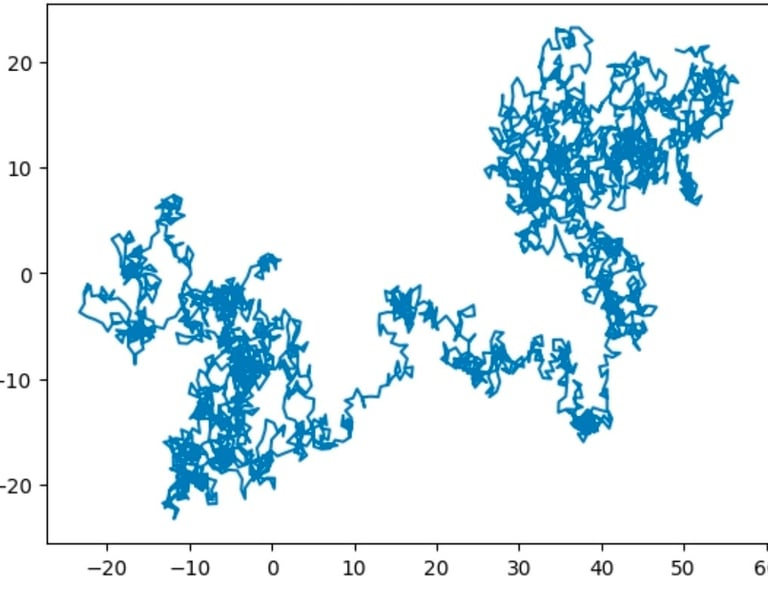
Line Theory – a one-dimensional cosmology Abstract We propose that spacetime, matter, and every interaction emerge from the topology of a single, infinite, one-dimensional line. Curvature arises when the line self-intersects; mass equals the density of crossings. Energy is tension; force, friction between parallel strands that never quite knot. No extra dimensions needed-just a stubborn thread that keeps looping back on itself until the loops connect, and disconnect, in equal measure.
Observable predictions: (i) light bends only where knots are dense; (ii) expansion accelerates because the line is fraying; (iii) dark matter is simply the line's shadow-old loops we can't see but still feel tugging.
Section 1 – Geometry Picture a string with no width. It moves forward only. Then it bends. Where it folds and kisses its own skin, mass appears. Call that density ρ = number of crossings per proper length. Zero crossings: vacuum. One: an electron. Six: a proton. The rest is combinatorics.
Section 2 – Dynamics Tension T ∝ 1/(separation between lines). When T > threshold, intersections fire photons-photons are the the line makes when it snaps back. Gravity? The ghost: mass drags everything else toward tighter loops, like yarn pulled through a finger-hole.
Section 3 – Thermals Entropy S grows only when knots loosen. That's why time runs forward-nothing can tighten every loop again. Dark energy is just slack: the line deciding it's had enough.
Section 4 – Tests – Gravitational lensing should correlate exactly with knot density; no smooth curvature allowed. – CMB should show fractal ripples-old fray lines. – At Planck length, the line stops pretending to be smooth; we'll see pixelation.
Read: Line Theory
Types of Publications
Academic/Scholarly: Journal articles (original research, reviews), conference papers, books, theses, technical reports.
General/Commercial: Books, magazines, newspapers, newsletters, brochures, pamphlets.
Official/Government: Reports (e.g., unemployment figures), legal documents, EU publications, company earnings reports.
Digital/Online: Blogs, websites, social media posts, open-access journals, online archives.
Publication Eligibility & Guidelines (Academic Focus)
Purpose & Importance
Dissemination: Sharing research, news, and ideas with specific or broad audiences.
Validation: Peer-reviewed publications establish credibility and contribute to academic discourse.
Communication: Informing the public, advancing science, or fulfilling legal/corporate requirements.
To find publications, use tools like Google Scholar for academic work or library databases, and follow specific submission guidelines for journals or publishers.
Publication Eligibility & Guidelines
Eligibility: Originality, relevance, adherence to ethical standards, and quality of research.
Guidelines:
Peer Review: A rigorous process where experts in the field evaluate the work before acceptance (common for journals).
Formatting: Specific styles (APA, MLA, Chicago) and structure (abstract, methods, results, discussion) for different venues.
Open Access: Making content free for readers, often with author-paid fees (APCs).
Impact: Measured by factors like journal impact factor, citation counts, and indexing in databases (Scopus, Web of Science).
contact@orbitem.com
+1-412-894-5680
© 2025. All rights reserved.